Insights for Reiki Practitioners from Mari Okazaki
Introduction: Reiki as a Cultural Bridge
Reiki is often described as a healing practice, a spiritual discipline, or a method of energy balancing. Yet, through the lived experience and teachings of Mari Okazaki, Reiki reveals itself as something far deeper: a cultural bridge that connects modern practitioners to ancient Japanese ways of being, perceiving nature, and understanding life itself.

For Reiki practitioners in the West, Reiki may first appear as a technique – hand positions, symbols, levels, and certifications. But in its Japanese context, Reiki is inseparable from culture, language, nature, and worldview. It is not simply something one does, but something one becomes.
Mari Okazaki’s life and work illuminate this truth. Having lived for over 25 years in Canada while remaining deeply rooted in Japan, and now dividing her time between the Gotō Islands and Canada, she embodies the living bridge between East and West. Through her teaching of Jikiden Reiki, her translation work for the Jikiden Reiki Institute, and her personal journey through grief, motherhood, illness, death, and return to Japan, she offers practitioners a rare and grounded understanding of Reiki’s original heart.
This article explores Reiki not as a technique alone, but as a way of life – one shaped by Japanese culture, Shintō spirituality, nature-based healing, and a profound acceptance of life’s impermanence.

Early Foundations: Loss, Resilience, and Natural Healing
Mari Okazaki’s path into Reiki did not begin with formal training. It began in early childhood, shaped by loss and necessity.
At the age of four, Mari lost her father to a medical accident. A simple mistake took the life of a 39-year-old man, leaving behind a young family. This early encounter with death profoundly shaped her worldview. From that moment, her family relied heavily on what could be done at home: nourishment, laughter, emotional resilience, and natural approaches to health.
Her mother, a cooking teacher, instilled in her children the importance of food, joy, and self-reliance. Healing was not something outsourced – it was lived daily.
20 years later, Mari faced another profound loss when her mother, after a long struggle with bipolar disorder, took her life. This experience brought her face to face with deep grief and trauma, yet also became a turning point. As she slowly reclaimed her will to live, Mari chose to begin again, moving to Canada in search of a new chapter in life. It was there that she encountered Reiki.
Years after settling into life in Canada, this early foundation in natural living resurfaced in a powerful way when Mari’s second son developed a severe case of eczema. His body was covered in open sores, with fluids leaking through broken skin. Medical specialists prescribed antihistamines and steroid creams, describing the condition as severe and chronic.
But Mari’s early experiences made her hesitant. She respected the doctors, yet instinctively felt that medication alone was not the answer. Instead, she turned again toward natural remedies: strict dietary changes, homeopathy, Chinese herbal medicine, and holistic approaches.
It was during this time that a Canadian friend made a pivotal suggestion:
“You’re from Japan. Reiki is from Japan. Why don’t you learn Reiki and help your baby yourself?”
This suggestion marked the formal beginning of her Reiki journey.
Reiki in Japan: Misunderstandings and Cultural Shadows
Ironically, despite Reiki originating in Japan, Mari’s initial reaction to the word itself was hesitation.
In modern Japanese usage, the kanji “Rei” (霊) is often associated with ghosts, psychic phenomena, or spiritual entities. For many Japanese people, the term carries uncomfortable or even negative connotations. Reiki can sound mysterious, suspicious, or cult-like.
Historical events reinforced this discomfort. In the early 1990s, Japan experienced a devastating subway attack carried out by the Aum Shinrikyō religious cult. This tragedy left a deep scar in the national psyche and intensified suspicion toward anything involving spiritual energy, hand-based practices, or invisible forces.
As a result, Reiki – despite its humble, practical origins – became culturally misunderstood within its own homeland.
Yet the kanji themselves tell a different story. “Rei” can also mean spirit, soul, or sacred essence, depending on context. Combined with “Ki” (energy), Reiki points not to ghosts or psychic powers, but to the human capacity to receive universal blessings, embody them, and allow them to flow naturally to others.
This linguistic nuance, so easily lost in translation, is one of the many bridges Mari has spent her life rebuilding.
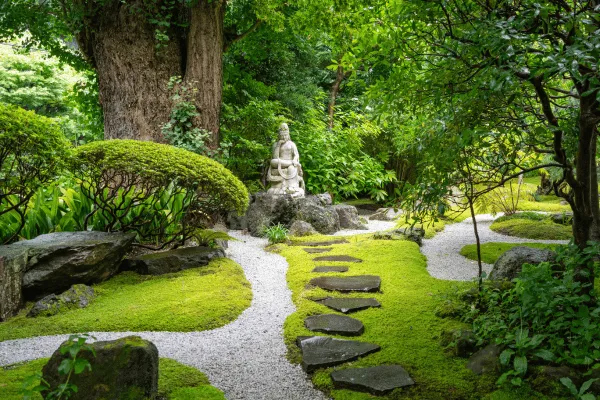
Three Worlds of Students: How Culture Shapes Reiki Understanding
Through decades of teaching, Mari has observed profound differences in how Reiki is received across cultures. Her experience teaching in English and Japanese, in Japan and abroad, has revealed three distinct groups of students.
1. Western Students
English-speaking students, primarily in Canada and the United States, often approach Reiki as a beautiful healing modality. They are drawn to its gentleness, its effectiveness, and its Japanese roots. Reiki is embraced as something meaningful and inspiring, often integrated into wellness practices and personal growth journeys.
2. Japanese Living Abroad
Japanese students living outside Japan experience Reiki as a reconnection. Through Jikiden Reiki, they rediscover aspects of Japanese culture they did not realize they had lost. The teachings feel familiar, comforting, and deeply emotional – like returning home without physically being there.
3. Japanese Living in Japan
For Japanese students living in Japan, encountering Jikiden Reiki often triggers awakening. Many express surprise: “How did I not know this?” Reiki becomes a reminder of cultural wisdom that has been forgotten in modern life. For these students, learning Reiki feels like reclaiming something essential.
These differences are not about right or wrong understanding. They reveal how Reiki adapts to cultural lenses – and why preserving its original context matters.
Translation as Transmission: Language Shapes Understanding
Mari’s role as an interpreter for Tadao Yamaguchi profoundly shaped her teaching. Translation, she learned, is not about words – it is about worldview.
Japanese concepts often cannot be translated directly into English. One Japanese word may require several sentences to convey its meaning accurately. To teach Reiki across cultures, Mari had to find language that Western students could understand without distorting the essence of the teaching.
This process refined her ability to explain Reiki not only to Western students, but also to Japanese practitioners. Even when teaching in Japanese, students often remark on how clear and accessible her explanations are.
Translation became transmission – not merely of language, but of cultural understanding.
The Iemoto System: Preserving Lineage and Depth
One of the most significant differences between Jikiden Reiki and many Western Reiki systems lies in its educational structure.
Traditional Japanese arts, such as tea ceremony, flower arrangement, and classical performance, are taught through the iemoto system. This system centers on a single house of origin, with teachings passed down carefully through defined levels of responsibility.
In this structure:
- There is one head (iemoto)
- Teachers teach practitioners
- Teacher-trainers are trained only when ready
- Lineage is preserved without competition
This system prevents comparison, hierarchy battles, and dilution of teachings. It is not about control, but about honoring what has been passed down.
Jikiden Reiki follows this model. It may appear restrictive to Western eyes, but its purpose is preservation – not superiority. Other Reiki systems have played a vital role in spreading Reiki worldwide. Jikiden Reiki exists to protect the original teachings.
Both are necessary.
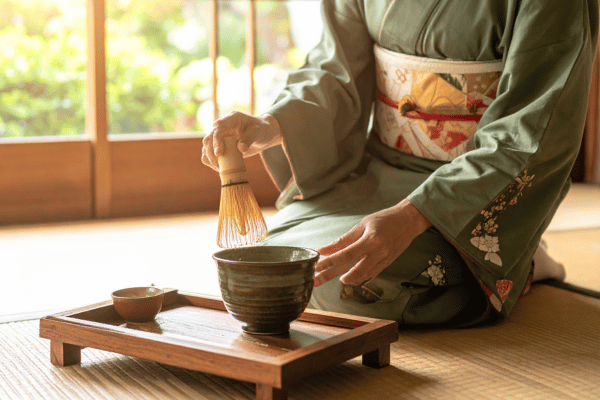
Reiki and Shintō: A Nature-Based Way of Life
At its foundation, Reiki is inseparable from Shintō, Japan’s indigenous spiritual tradition. Shintō is not a religion in the Western sense; it does not revolve around doctrine, belief systems, or worship of a single deity. Rather, it is a way of living in relationship with nature, shaped over thousands of years and woven quietly into everyday Japanese life.
In ancient Japan, long before the existence of modern medicine, people understood that health was sustained through harmony with the natural world. When illness arose, there were no doctors, pharmaceuticals, or diagnostic tools. Instead, people turned to what was pure, stable, and life-giving: nature itself.
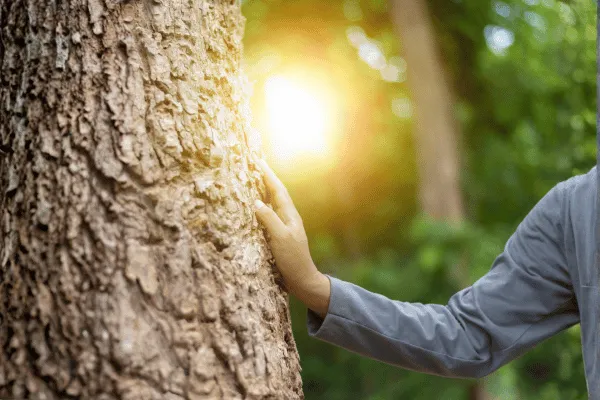
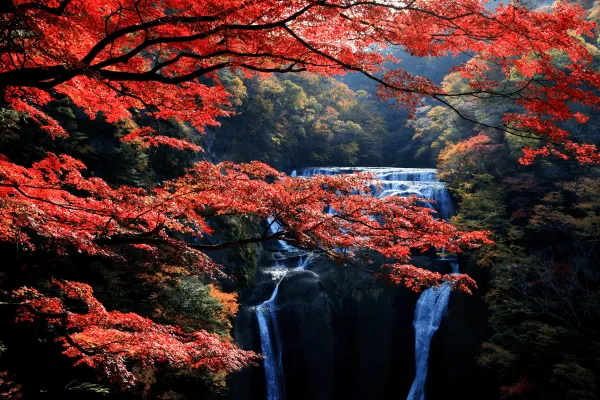
If a village was near a forest, a sick person would go to the largest, oldest tree and sit or lie at its roots, allowing the tree’s presence to restore balance. If the village was near the ocean, they would rest against a great rock by the shore. Near rivers or waterfalls, they would sit where water flowed continuously. Healing was not something imposed – it was something received.
Nature was understood as a source of vitality, clarity, and balance. Trees, rocks, water, wind – none of these were seen as separate from human life. They were expressions of the same life force that moved through the human body.
Reiki arises directly from this understanding.
Rather than requiring the sick person to go out into nature, Reiki allows the practitioner to bring nature to the person. Through Reiki practice, the practitioner becomes like the great tree, the solid rock, or the flowing river – quiet, stable, and present. The practitioner does not heal in the sense of “fixing” or “curing.” Instead, they provide the same pure, natural energy that nature has always offered.
In this way, Reiki is not a system of intervention but one of support. The receiver’s body does the healing from within, just as it would when resting in nature. Reiki simply creates the conditions for balance to return.
This perspective explains why, in traditional Reiki understanding, practitioners do not refer to themselves as “healers.” Healing is not something done to someone; it is something that happens within them. The practitioner’s role is to be present, grounded, and clear – like nature itself.
Protection, Cleansing, and the Illusion of Fear
Understanding Reiki through its Shintō roots also reframes many modern concerns around practice. Nature does not judge, resist, or fear what comes to it.
- A tree does not worry about absorbing negativity.
- A rock does not need to protect itself.
- Water flows continuously, renewing itself without effort.
Similarly, when practitioners remain grounded in natural flow, Reiki itself becomes grounding and protective. Fear arises only when attention shifts away from presence and toward control.
Reiki is an extension of this practice. When practitioners trust the flow, there is nothing to block, shield, or cleanse.
Instead of the sick person going to nature, the Reiki practitioner brings nature to the person.
- The practitioner becomes the tree.
- The practitioner becomes the rock.
- The practitioner becomes the channel.
This understanding dissolves the idea of the practitioner as a “healer.” Healing comes from within the receiver. Reiki simply provides nourishment – energetic nutrition – that the body uses where needed.
Daily Practice: The Lifetime Homework
Mari gives her students a simple assignment – one that lasts a lifetime.
Before sleep, place your hands on your body.
That is all.
Self-Reiki maintains the energetic channel, supports prevention, and strengthens receptivity. For those living alone, it becomes a daily act of nourishment and care.
Consistency, not complexity, is the practice.
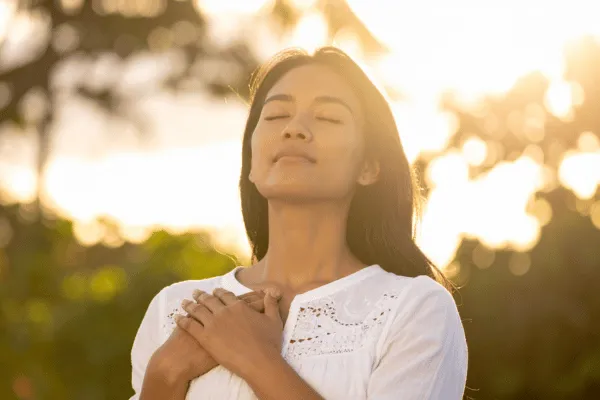
Reiki as Energetic Nutrition
Mari explains Reiki not as a form of power, force, or personal ability, but as nourishment – something the body naturally knows how to use.
When a practitioner places their hands on the body, they do not send energy or direct healing. Instead, they become a pipe – a clear channel between pure nature energy and the receiver. Through this connection, natural energy flows into the body, much like nourishment entering a living system.
The body itself is intelligent. It recognizes what has arrived and determines how that energy should be used – whether to support an organ, restore balance, assist recovery, or simply maintain overall health. Healing does not come from the practitioner’s intention or effort, but from the body’s own wisdom responding to what it receives.
Mari relates this understanding to an old Japanese concept known as kiketsuryū, a term that expresses how life is sustained:
- Ki – energy
- Ketsu – blood
- Ryū – flow
In traditional Japanese understanding, both blood flow and energy flow are essential for life. Blood flow is visible and supported by modern science, so it is widely accepted. Energy flow, while unseen, has been understood and respected culturally for centuries.
Reiki works by supporting this unseen flow – quietly, naturally, and without force – allowing the body to return to balance from within.
Reiki, Illness, and Transformation
Through many years of teaching and practice, Mari Okazaki has witnessed a wide range of transformations in people who have learned and practiced Reiki. These changes have included improvements in chronic and autoimmune conditions, clearer vision, restored movement, and renewed physical strength. Yet while these outcomes are meaningful, Mari emphasizes that physical improvement is not the most important transformation Reiki offers.
What moves her most deeply is the way Reiki reconnects people to life itself.
In one experience, a man living with a rare neurological autoimmune condition came to learn Reiki with his wife. The disease interfered with communication between his brain and muscles, affecting his vision, coordination, and ability to swallow. Over time, his world had become smaller. He stopped playing tennis, struggled with daily activities, and became increasingly discouraged and withdrawn.
During the Reiki course, both he and his wife began practicing Reiki immediately, offering treatments to one another. By the third day of the class, he noticed that his vision had begun to improve. In the weeks that followed, his wife shared that he was once again playing tennis, chopping wood, and spending time outdoors – often staying out for long periods because he felt alive and engaged again.
For Mari, the significance of this experience was not only the improvement of symptoms, but the return of participation in life. Reiki did not simply ease a condition; it helped restore confidence, motivation, and joy. The man was no longer defined by illness. He was moving, playing, and living again.
This, Mari reflects, is where Reiki’s deepest transformation often occurs. Even when physical conditions remain, Reiki can shift a person’s relationship to their body, their circumstances, and their sense of self. It helps people move from discouragement toward engagement, from isolation toward connection.
In this way, Reiki becomes not just a response to illness, but a support for life itself.
Reiki and Death: The Birth of the Soul
Perhaps the deepest teaching Mari Okazaki offers is found in her understanding of Reiki’s role at the end of life. Through personal loss, hospice volunteering, and years of practice, she has come to see death not as a failure of healing, but as a natural transition – one that deserves the same care, presence, and reverence as birth.
Mari often speaks of death as the birth of the soul. Just as childbirth marks the arrival of the physical body into this world, death marks the soul’s movement into its next phase. From this perspective, death is not something to resist or correct, but something to accompany with gentleness and respect.
Her time volunteering in hospice care profoundly shaped this understanding. Sitting with people whose lives were drawing to a close, she recognized that their needs were very different from those of someone seeking recovery. At the end of life, people are not looking to be cured. They are seeking peace, reassurance, and permission to let go.
In these moments, Reiki reveals its most essential nature. There is no goal to achieve, no symptom to improve, no outcome to expect. The practitioner’s role is simply to be present – hands resting softly, heart open, mind quiet. When expectation dissolves, Reiki flows without obstruction.
Mari describes this state as being, rather than doing. The practitioner is not trying to change anything. They are simply sharing space, allowing peace to arise naturally. In this quiet presence, something profound often occurs: fear softens, breath deepens, and a sense of calm settles in.
In this way, Reiki becomes a companion through life’s final transition, offering dignity, comfort, and peace. It reminds both practitioner and receiver that healing is not always about prolonging life, but about honoring it fully, right to the end.
Gratitude as the Final Healing
Through a lifetime marked by profound loss and deep spiritual inquiry, Mari Okazaki has come to recognize three distinct ways people approach death.
- Some die unwillingly, their lives cut short before they are ready to leave.
- Others die because they no longer wish to live, overwhelmed by suffering or despair.
- And then there are those who reach the end of life with a quiet sense of gratitude – grateful not because life was perfect, but because it was fully lived.
Mari’s understanding of these three paths is not theoretical. Her father died suddenly in a medical accident, leaving behind young children and unanswered grief. Her mother later died by suicide, carrying a very different relationship to life and death. And she has also accompanied people who, despite illness or hardship, were able to look back on their lives with appreciation and peace.
It is this third way, Mari believes, that Reiki can help cultivate.
Reiki does not promise a life free from pain, illness, or loss. Instead, it gently supports people in staying connected to themselves through every stage of life. By encouraging presence rather than resistance, Reiki helps soften fear, release bitterness, and make space for acceptance. Over time, this inner shift can transform how life is experienced – and how it is remembered.
In Mari’s view, this is Reiki’s final healing: not the extension of life at all costs, but the ability to reach its end and say, “I am grateful for the life I have lived.” From that place, the transition can unfold gently, with peace rather than fear.
Conclusion: Reiki as a Way of Being
Reiki is not merely hands-on healing.
It is not symbols alone.
It is not levels or titles.
Reiki is remembrance.
It is remembering nature.
Remembering humility.
Remembering presence.
Remembering gratitude.
Through the life and teachings of Mari Okazaki, Reiki reveals itself as a quiet, powerful way of being – rooted in Japan, offered to the world, and alive wherever hands meet with sincerity.
This article is inspired by and grounded in Mari Okazaki’s teachings shared at the Reiki Rays 2025 Reiki Healing Summit.
Article by Mari Okazaki
Free eBook download: We’ve created an eBook with our best articles on this topic, and offer it for free to all our newsletter subscribers.
Mari Okazaki
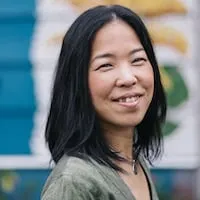
Jikiden Reiki Dai Shihan
Mari is originally from Japan and spent the past 25 years living in Chilliwack, BC, Canada. Today she divides her time between the Goto Islands in Japan and Chilliwack. A Jikiden Reiki® Dai Shihan (senior teacher) recognized by the Jikiden Reiki® Institute, Mari has been both teaching and offering Reiki since 2006. She loves sharing Reiki not only as a gentle, effective home therapy, but also as a way to connect with the heart of Japanese culture. She regularly teaches Jikiden Reiki® Shoden and Okuden certification classes, and offers Shihankaku (assistant teacher) training upon request.
For more than a decade, Mari organized and translated Jikiden Reiki® seminars in Vancouver, and also traveled with Tadao Yamaguchi, head of the Jikiden Reiki Institute, to Halifax, Seattle, and San Francisco as his interpreter. During the pandemic, she felt deeply the importance of preserving Reiki in its home country of Japan. This calling brought her to the Goto Islands, where she has created a new base while continuing to support students and Reiki communities worldwide.
You can reach Mari at: [email protected]
Website: www.jikidenreikiwithmari.com
Facebook: www.facebook.com/Mari.Okazaki22
Instagram: www.instagram.com/mari.okazaki


Leave a Reply